What is SEO and how does it work? Search engine optimization (SEO) helps your website appear in search engine results when people look for products, services, or information related to your business. By using relevant keywords, publishing helpful content, improving website performance, and building quality links, businesses can attract organic traffic and reach potential customers online.
Today, having a website is not enough to grow a business online. Your potential customers need to find you when they search on Google. This is where SEO becomes important. Whether you run a startup, a local business, an online store, or a software company, understanding SEO can help you build online visibility and generate long-term opportunities.
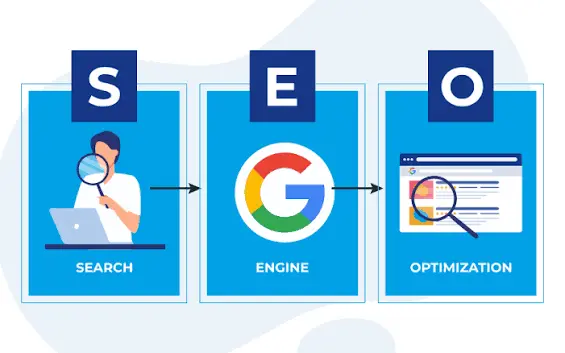
What Is SEO?
SEO stands for Search Engine Optimization. It is the process of improving a website so that search engines can understand its content and users can find useful information through unpaid search results.
For example, if someone searches for “custom software development company,” businesses with relevant, useful, and well-optimized pages may appear in the search results.
SEO includes several activities, such as:
-
Keyword research to understand what people search for.
-
On-page SEO to optimize titles, headings, content, and images.
-
Technical SEO to improve crawling, indexing, and website performance.
-
Content creation to answer users’ questions.
-
Off-page SEO to earn relevant, trustworthy backlinks.
-
Local SEO to improve visibility for location-based searches.
The main goal is to make your website useful to your audience and accessible to search engines.
SEO helps search engines understand:
-
What your website and individual pages are about.
-
Which search queries your content may be relevant to.
-
Whether your pages provide useful information.
-
How your website connects to other relevant resources.
SEO does not guarantee first-page rankings. Instead, it helps improve your website’s eligibility and ability to compete for relevant searches over time.
How Does SEO Work?
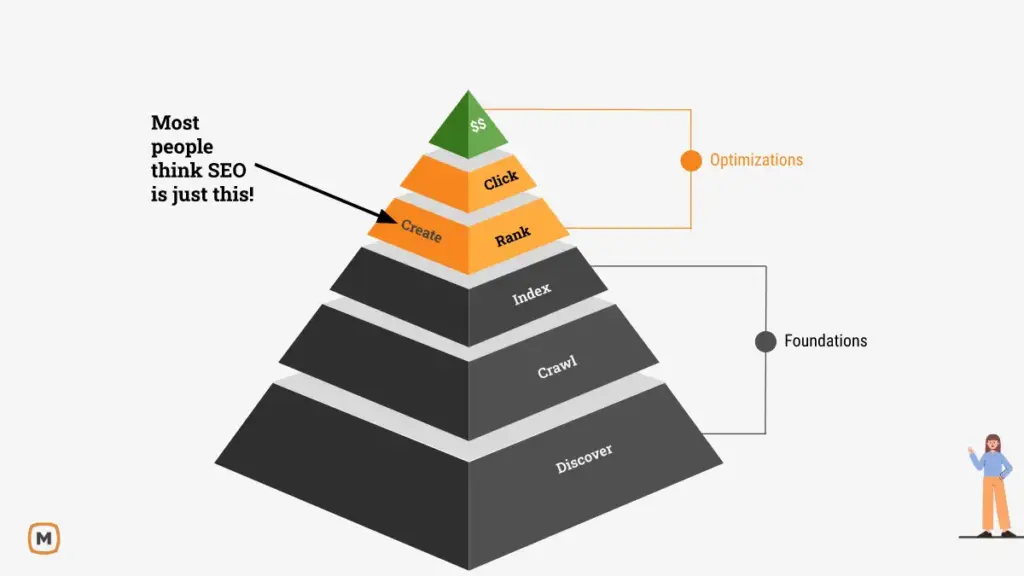
Understanding how SEO works begins with understanding how search engines discover and display web pages. Search engines generally follow three main processes: crawling, indexing, and ranking.
1. Crawling
Crawling is the process through which search engines discover pages on the internet. Automated programs, often called crawlers or bots, follow links and explore accessible web pages.
You can help search engines discover your content by creating a logical website structure, using internal links, and maintaining an XML sitemap.
2. Indexing
After discovering a page, a search engine may analyze its content, images, and other information to understand what the page is about. It can then store the information in its index.
Not every page discovered is guaranteed to be indexed. Duplicate content, access restrictions, technical errors, or low-value pages can affect whether a page is included.
3. Ranking
When someone searches for something, the search engine selects and orders results that are most relevant and useful for that query.
Factors that can influence visibility include content relevance, page usability, website accessibility, and the quality of information. There is no guaranteed shortcut to the top position, and SEO results depend on competition and many other factors.
Why Is SEO Important for Businesses?
SEO can help businesses attract relevant visitors, establish trust, and create opportunities for long-term growth.
1. Increases Organic Website Traffic
When your pages appear for relevant search queries, potential customers can discover your business without you paying for every organic click.
2. Builds Brand Credibility
Users can discover your expertise through helpful blog posts, service pages, case studies, and educational resources. Consistently useful content can strengthen your brand’s credibility.
3. Supports Lead Generation
SEO can attract visitors who are actively researching products or services. Clear service descriptions, contact forms, and calls to action can help turn relevant visitors into enquiries.
4. Supports Long-Term Growth
Unlike paid advertising, organic search traffic does not depend on paying for every click. However, SEO still requires investment in content, technical improvements, monitoring, and ongoing updates.
5. Helps You Understand Your Audience
Keyword research and search performance data reveal the questions customers ask, the problems they want to solve, and the topics they care about.
What Are the Main Types of SEO?
An effective SEO strategy combines several activities rather than focusing on keywords alone.
1. On-Page SEO
On-page SEO involves optimizing elements within individual webpages to help users and search engines understand the content.
Important on-page SEO practices include:
-
Using relevant keywords naturally.
-
Writing clear title tags and meta descriptions.
-
Organizing content with descriptive H1, H2, and H3 headings.
-
Creating useful, original content.
-
Adding descriptive image alt text.
-
Using relevant internal links.
-
Making pages easy to read on mobile devices.
For example, a page about custom software development should explain the service, its benefits, suitable use cases, and the problems it solves. Repeating the same keyword excessively will not make the content more useful.
2. Off-Page SEO
Off-page SEO refers to activities outside your website that can help build its reputation and visibility.
Examples include earning relevant backlinks, publishing expert contributions, building genuine industry relationships, and promoting useful resources.
Quality matters more than collecting large numbers of links. Avoid manipulative link-building schemes that attempt to artificially influence rankings.
3. Technical SEO
Technical SEO helps search engines access, crawl, understand, and index your website.
Key areas include:
-
Website speed and performance.
-
Mobile usability.
-
HTTPS security.
-
XML sitemaps.
-
Robots.txt and indexing directives.
-
Canonical URLs and duplicate content management.
-
Broken links and redirect errors.
-
Structured data where appropriate.
A technically sound website makes it easier for search engines to process your content and for visitors to navigate your pages.
4. Content SEO
Content SEO focuses on creating helpful pages that satisfy search intent.
Businesses can publish educational blog posts, detailed service pages, comparison articles, FAQs, and practical guides to address customer questions at different stages of the buying journey.
For example, a business planning a new digital product may first search for development costs, then compare solutions, and finally look for a development partner.
A well-planned content strategy can support these different needs.
5. Local SEO
Local SEO helps businesses improve their visibility in geographically relevant searches, such as “web development company in Noida.”
Businesses serving specific areas should maintain accurate business information, optimize their Google Business Profile, collect genuine customer reviews, and create useful location-specific content where appropriate.
How to Do SEO Step by Step
If you are new to SEO, follow these practical steps to build a foundation for your website.
Step 1: Conduct Keyword Research
Identify the terms your target audience uses when searching for your products, services, and solutions.
Focus on search intent, relevance, and realistic opportunities rather than choosing keywords solely because they have high search volume.
Step 2: Analyze Search Intent and Competitors
Review the types of pages appearing for your target queries. Determine whether searchers expect a guide, a comparison, a product page, or a service page.
Use this information to create content that answers the question more completely and clearly.
Step 3: Optimize Important Pages
Improve your homepage, service pages, and important landing pages. Make each page’s purpose clear and use descriptive headings, relevant keywords, and helpful calls to action.
Step 4: Publish Useful Content
Create original blog posts that solve real customer problems. Link related articles to relevant service pages so readers can move naturally from learning about a topic to exploring a solution.
Step 5: Improve Technical Performance
Check mobile usability, page speed, indexing, internal links, and sitemap configuration. Use Google Search Console to identify indexing problems and monitor search performance.
Step 6: Measure and Improve
Track organic clicks, impressions, click-through rates, relevant keyword performance, leads, and conversions. Review the data regularly and improve pages based on what you learn.
SEO is an ongoing process, and results can take weeks or months to become noticeable.
How SEO Connects With Web Development and Digital Services
SEO is not just a content activity. Your website’s technical foundation, user experience, and digital strategy can all influence how effectively it attracts and serves visitors.
For example, custom software development can help businesses build digital systems that support their operational needs. You can explore Builder Monkey’s custom software development services to learn about tailored business solutions.
Businesses building subscription-based digital products can also explore SaaS development services. A clear public-facing website and useful product information can support the discoverability of a SaaS business.
For startups, MVP development services can help turn an idea into a product with essential features. Planning SEO and content requirements early can help ensure the product’s public pages address relevant customer needs.
If you are unsure which technology or approach fits your business, software consultation services can help you evaluate your requirements and plan an appropriate solution.
The important point is that SEO should support your wider business objectives. More traffic is valuable only when it reaches the right audience and helps achieve meaningful outcomes.

Common SEO Mistakes to Avoid
Even a well-designed website can struggle to attract organic traffic if its SEO strategy has common weaknesses.
Avoid these mistakes:
-
Keyword stuffing: Repeating keywords unnaturally makes content difficult to read.
-
Thin content: Pages should provide useful information rather than simply target a phrase.
-
Ignoring mobile users: Your website should work well on smaller screens.
-
Missing internal links: Related pages should connect through useful, descriptive links.
-
Duplicate content: Similar pages without a clear purpose can create confusion.
-
Ignoring technical problems: Indexing errors and broken links can affect accessibility.
-
Expecting instant results: SEO takes time and requires ongoing monitoring.
-
Focusing only on rankings: Traffic quality, enquiries, and conversions matter too.
How Long Does SEO Take to Show Results?
SEO timelines vary depending on competition, website history, technical health, content quality, and the resources invested.
Some changes may be reflected relatively quickly, while meaningful improvements in organic visibility can take several months or longer. New websites often need time to build useful content, earn recognition, and establish search visibility.
Monitor performance consistently and avoid judging an SEO strategy using only short-term ranking fluctuations.
Conclusion
Understanding what SEO is and how it works is an important step toward building a stronger online presence. By researching keywords, creating helpful content, improving technical performance, optimizing service pages, and earning relevant backlinks, businesses can make their websites easier to discover.
SEO requires patience, consistent effort, and regular measurement. Focus on helping your audience first, then use search data to improve your strategy over time.
If you want to build or improve your digital presence, visit Builder Monkey or contact our team to discuss your business requirements.
Frequently Asked Questions About SEO
1. What is SEO in simple words?
SEO is the process of improving a website so that it can appear more prominently in relevant unpaid search results and attract visitors interested in its content or services.
2. How does SEO work for beginners?
Start by researching keywords, creating helpful content, optimizing titles and headings, improving website performance, adding relevant internal links, and monitoring your results in Google Search Console.
3. Is SEO free?
Organic search listings do not charge a fee for each click, but SEO requires time and effort. Businesses may invest in content creation, technical improvements, tools, or professional services.
4. What are the main types of SEO?
The main categories commonly discussed are on-page SEO, off-page SEO, technical SEO, and content SEO. Local SEO is also important for businesses targeting customers in specific areas.
5. How long does SEO take to work?
It varies by website and competition. Meaningful results often take several months, and continued improvement is usually necessary to maintain visibility.
6. Is SEO better than Google Ads?
SEO and Google Ads serve different purposes. SEO can build long-term organic visibility, while Google Ads can provide paid placement when campaigns are active. The right choice depends on your budget, goals, timeline, and audience.
7. Can SEO help a small business?
Yes. Small businesses can target relevant service keywords, specific customer needs, and local searches to improve visibility and attract potential customers.
Leave a Reply